Sniff Test, Soggy Poppadoms and Other Ways to Spot a Proper Curry House
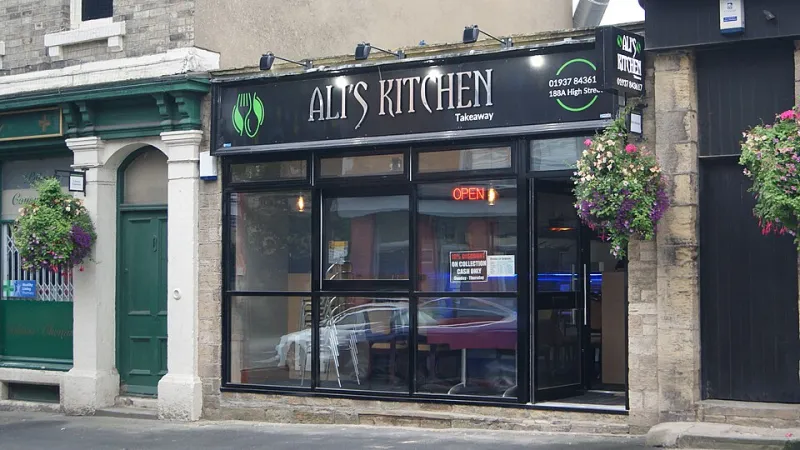
Photo: Mtaylor848, CC BY-SA 4.0, via Wikimedia Commons
People are always asking me how to tell if a curry house is any good before they've ordered a single thing. And honestly? It's a fair question. We've all been burned by that one takeaway with the glossy photos of a lamb pathia that turns out to be a lamb-shaped rumour floating in orange grease.
So consider this my gift to the nation: the checklist I run through myself whenever I try a new place. Call it professional paranoia. Call it the Mrs Chaudhary Test. Either way, it hasn't failed me yet.
Question One: What Does the Doorway Smell Like?
Close your eyes at the threshold. A proper Indian kitchen announces itself before you've seen a single menu. You want cumin hitting hot oil, ginger, that deep, toasty aroma of spices being bloomed rather than merely reheated.
What you don't want is the smell of industrial cleaner fighting with a faint whiff of yesterday's chips. Spice paste from a tub has no smell at the door. Fresh tadka does. If the only fragrance is bleach, walk — politely, we're British — but walk.
Question Two: Are the Poppadoms Trying to Tell You Something?
I know, I know, poppadoms are the warm-up act. But they're the most honest item on any menu because nobody bothers to fake them badly with pride.
A good poppadom snaps. It has blistered, bubbly character, a whisper of black pepper, and it shatters rather than bends. If yours arrives leathery and chewy at the edges, someone bought them in bulk, stored them somewhere damp, and has stopped caring. And a kitchen that's stopped caring about the poppadom has stopped caring about everything.
Question Three: Does the Menu Have a Pulse?
Here's a trade secret: a menu with eighty dishes, all priced within 40p of each other, all available in mild, medium or hot, is not a menu. It's a spreadsheet.
Look for a kitchen with opinions. A proper chef's menu will have dishes that don't fit the mould — a fish curry from a particular region, a seasonal special, something on the specials board that changes because the market changed. Uniformity is the smell of a central kitchen and a van. Character means someone in the back is cooking, not assembling.
Question Four: How Does the Rice Behave?
This one's sneaky because rice looks innocent. But it's the tell that separates the diligent from the indifferent. Basmati should be separate grains, fragrant, each one distinct — not a clumped pillow that's been sat in a hot cupboard since Tuesday.
And check the colour. If your pilau rice is a uniform, slightly alarming yellow throughout, someone's been generous with food colouring rather than saffron or turmeric. Real kitchens don't need to paint their rice.
Question Five: Do They Ask You Anything?
This is the big one, and it costs nothing. When you order, does anyone engage? Do they ask how you like your spice, warn you that the vindaloo is actually hot, suggest the lamb might run out tonight because it's been popular?
A good curry house is run by people who eat their own food and care whether you enjoy it. If the person on the till can tell you which dish their own mum would order, you've found somewhere special. If they can't tell you anything about anything, you've found a vending machine with a phone number.
The Verdict
No single question disqualifies a place on its own — we all have an off night, and even I once served a naan with the structural integrity of a flip-flop. But two or three failures together? That's a pattern.
Trust your nose, interrogate your poppadoms, and never underestimate a kitchen that asks questions back. Your Friday night deserves nothing less.