Bhuna, Dhansak & Chaat: The Secret Handshake of the Indian Takeaway Menu
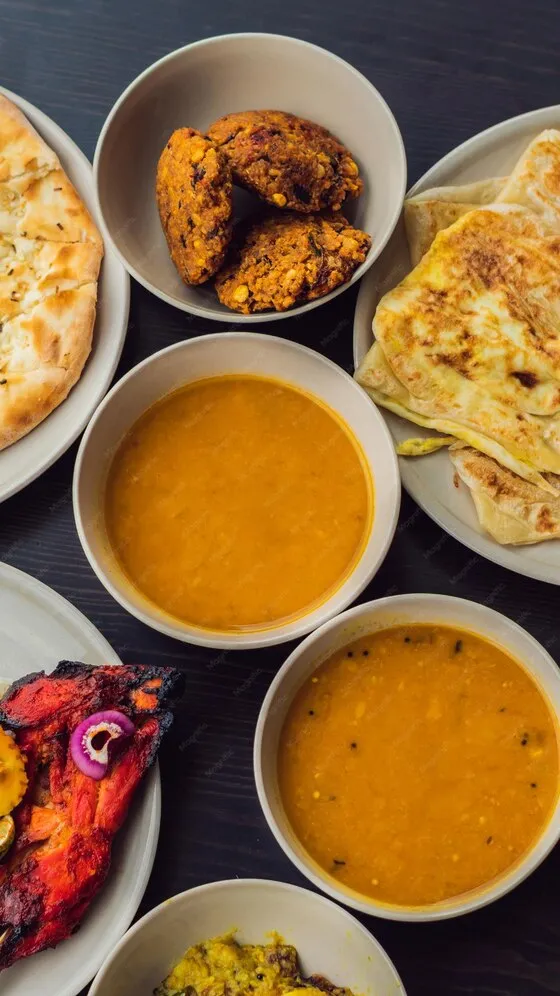
Photo: indian takeaway menu curry dishes on wooden table, via img.freepik.com
There's a special kind of panic that sets in when you're standing at a takeaway counter — or worse, on the phone to one — and the person behind you sighs because you've been reading the menu for four minutes and still haven't decided between a rogan josh and a dhansak.
We see you. We were you. And honestly? Half the people who order with total confidence are just guessing too. So pour yourself a cuppa, and let us walk you through the menu like a mate who happens to know a lot about curry.
First, a Little History (Because It Explains Everything)
Here's the thing about British curry house menus: they're a beautiful historical accident. When Bangladeshi and Indian restaurateurs began opening kitchens across the UK in the 1950s, 60s and 70s, they adapted dishes to suit local tastes — milder spice, richer sauces, and a proper pile of rice alongside.
The result? A whole vocabulary of dishes that don't really exist in India in the form we know them. A 'madras' as served in Manchester is a British invention. The korma you love? It has roots in Mughal court cooking, but the creamy, mild version on UK menus is very much a British interpretation.
Knowing this should make you feel better. The menu isn't a test. It's a conversation that's been going on between India and Britain for over a century — and you're allowed to join in at any point.
The Big Three, Decoded
Bhuna — In Hindi and Urdu, bhunna means to fry or roast spices over heat. On the menu, a bhuna is a dry-ish curry: thick, intensely flavoured, with the sauce clinging to the meat rather than swimming around it. If you like flavour without too much liquid, this is your friend. Medium spice, big character.
Dhansak — A Parsi classic with Gujarati and Persian influences, traditionally made with lentils and often pineapple for a sweet-and-sour tang. In the UK it usually means a medium-hot curry with a slightly sharp, fruity edge. It's the dish for people who find kormas a bit shy but vindaloos a bit shouty. The Goldilocks option, if you will.
Chaat — Now this one's a different beast entirely. Chaat means 'to lick' — as in, so tasty you'll lick your fingers. It refers to a whole family of Indian street food snacks: crispy, tangy, sweet, spicy and crunchy all at once. Think puffed pastry smothered in yoghurt, tamarind chutney and sev (those crispy yellow noodle things). If you see chaat on the menu, order it. Trust us. It's the support act that upstages the headline.
The Great Spice Myth
Right, let's settle this once and for all: spice level is not a measure of how good you are as a person.
There's a persistent idea that ordering mild is somehow cheating, and that you must work your way up the heat ladder like it's a video game. Nonsense. A well-made korma is a thing of beauty. A madras has more complexity than heat-hunting tourists give it credit for. And chilli heat, while lovely, is only one dimension of flavour — like judging a song solely by how loud it is.
That said, a quick guide: korma sits at the gentle end, tikka and masala are mild-medium, bhuna and rogan josh are medium, madras and dhansak bring proper warmth, and vindaloo and phall are for people who've made peace with their choices.
The Questions the Regulars Ask
Want to level up? Here's what seasoned orderers actually say:
- 'What's good today?' — Chefs love this question. It usually gets you the freshest, most thoughtfully cooked thing on the menu.
- 'Can you make it medium-hot, but proper medium?' — Spice calibration is an art, and most kitchens are happy to dial it in if you're honest about your tolerance.
- 'What's the chef's own dish?' — Every kitchen has one. It's rarely on the front of the menu, and it's often the best thing they make.
- 'Can I get extra sauce with that?' — For the rice-soppers among us. There is no shame. There is only gravy.
Your First Order, Solved
Still nervous? Here's a foolproof starter strategy: order one curry you half-recognise (a chicken tikka masala or a rogan josh), one rice, one naan, and one thing you've never tried — ideally a chaat or a starter with a funny name. That way you get comfort and adventure in the same bag.
And if you get it 'wrong'? There is no wrong. There's only next Friday's order. Which, if you ask us, is a rather lovely thing to look forward to.
See? You're basically a regular already.